

Living Heart Healthy
January 27, 2020
Did you know heart disease is the number one cause of death for both men and women in the United States? It is an equal-opportunity killer which claims over 600,000 million lives annually. But there are things you can do to lower your risk of a heart attack or prevent another one from happening again.
February is American Heart Month, and we asked Masonic Villages’ medical and wellness staff from across the state to weigh in on the topic.
Some heart attack warning signs are sudden and intense, but most of them start slowly with mild pain or chest discomfort, discomfort in other areas of the upper body, shortness of breath, cold sweats, nausea or lightheadedness.
Risk factors for heart disease include smoking, diabetes, family history, stress, lack of sleep, high blood pressure and cholesterol, being overweight, smoking and lack of exercise. The good news is that many of these risk factors can be controlled, from healthy eating to smoking cessation.
While you can’t control genetics, family history gives you some idea of the level of risk and how aggressively you need to manage your lifestyle and medical interventions, said Dr. John Mast, medical director at Masonic Village at Elizabethtown.
“If every male in your family has had a heart attack by age 50, you should be more aggressive in managing the risk factors,” he said.
Kara LaFreeda, wellness program manager at Masonic Village at Lafayette Hill, stresses the importance of “knowing your numbers,” from your cholesterol (both “good” and “bad”) to blood sugar levels, and having your blood pressure checked regularly.
Maintaining the appropriate body weight and “waist” (extra weight around the midsection) is important, as well as exercising for 20 minutes, three times a week, at a moderate intensity, said Dr. Timothy Reekie, medical director at Masonic Village at Lafayette Hill. “That is the goal, but any activity will do. Activity matters. Keep moving.”
A plant-based diet can help lower your risk of heart disease by controlling saturated fats, which also helps with weight control. “The people across the globe who live longest tend to eat meat in a celebratory fashion, on anniversaries and birthdays, but not on a regular basis,” he said.
Beyond the Physical
While it’s important to combat the physical risk factors for heart disease, addressing the psychological factors is equally encouraged.
“Avoid bitterness and anger, which is destructive, not just personally, but very hard on our hearts,” Dr. Reekie said. “Many people are stressed, but feel joyful, happy and satisfied by it. Other people who are stressed feel bitter, overwhelmed and unappreciated. It’s not about the stress, it’s the response to the stress.”
You can control your body’s response to excessive stress through mindfulness and meditation. Practice gratitude. Write down three things, people or events you’re grateful for each day, and focus on that.
“Not only does that help control your mind, it helps control your cortisol epinephrine (adrenaline) levels,” Dr. Reekie said. “It also helps cultivate a release of oxytocin, the ‘happy hormone’ that is good for your heart.”
If you’re recovering from a heart attack, it’s important to do cardiac rehabilitation, a program that involves a return to exercise and education on the appropriate diet and has been proven to modify risk factors significantly after a heart attack, Dr. Mast said.
But as we age, and memory declines, it can become more of a challenge to follow the recommendations for diet and lifestyle.
“Often, a health coach needs to be as intimately involved as possible to help older adults make appropriate choices,” he said.
Follow your doctors’ treatment plan and realize that you are at risk for another event, LaFreeda said.
“Be aware of your body and report any signs or symptoms immediately,” she said. “Improving your heart health will depend on how well you adhere to medical advice.”
Finding the Right Level of Support for Your Lifestyle: Independent Versus Assisted Living
Depending on their lifestyle and health care needs, older adults approaching retirement age may find that the ideal living option for one person isn’t necessarily the best fit for another. Considering the unique wants and

New Game Room Opens at Masonic Village at Lafayette Hill
Masonic Village at Lafayette Hill residents celebrated the grand opening of “The Village Green” game room this month with balloons, a ribbon cutting with Executive Director Denise Jones and a brand-new sign at the entrance. Handmade in the woodshop by resident Chris Reynolds, the sign is especially meaningful – Chris is the community’s longest-tenured resident, having called Lafayette Hill home for 26 years!
Better Sleep for a Brighter Mind
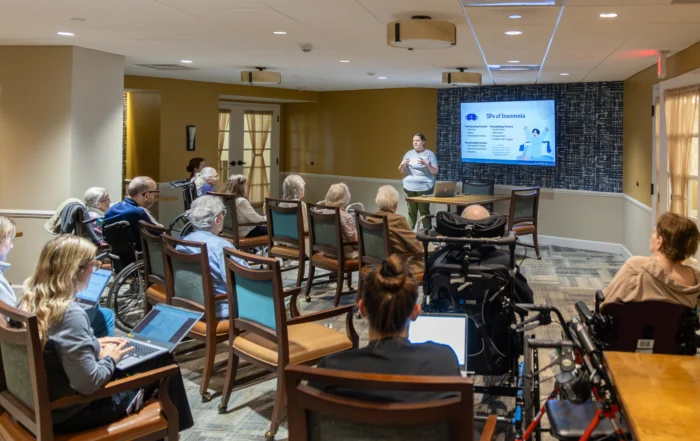
Normal physiological aging reduces sleep time by about 10 minutes per decade and lightens deep sleep, Allison said, but chronic problems with falling asleep or non-restorative sleep are not considered part of normal aging. Only 19% of older adults have documented sleeping disorders by their healthcare providers.

