
Better Sleep for a Brighter Mind
October 20, 2026
Do you lay awake in bed for more than 30 minutes several times a week? Have you noticed your mind spinning as soon as your head hits the pillow? Do you worry about how you’ll function the next day on so little sleep?
If any of these questions resonate with you, you may be one of the 69 % of older adults who report sleep issues. This is because as we age, our bodies tend to produce less melatonin (sleep hormone) and we become more sensitive to cortisol (stress hormone), said Allison Merrill, Director of Rehabilitation at Masonic Village at Lafayette Hill. When worries strike, our nervous system enters a stage of vigilance, and the brain can get stuck in a “fight or flight” state of high alert.
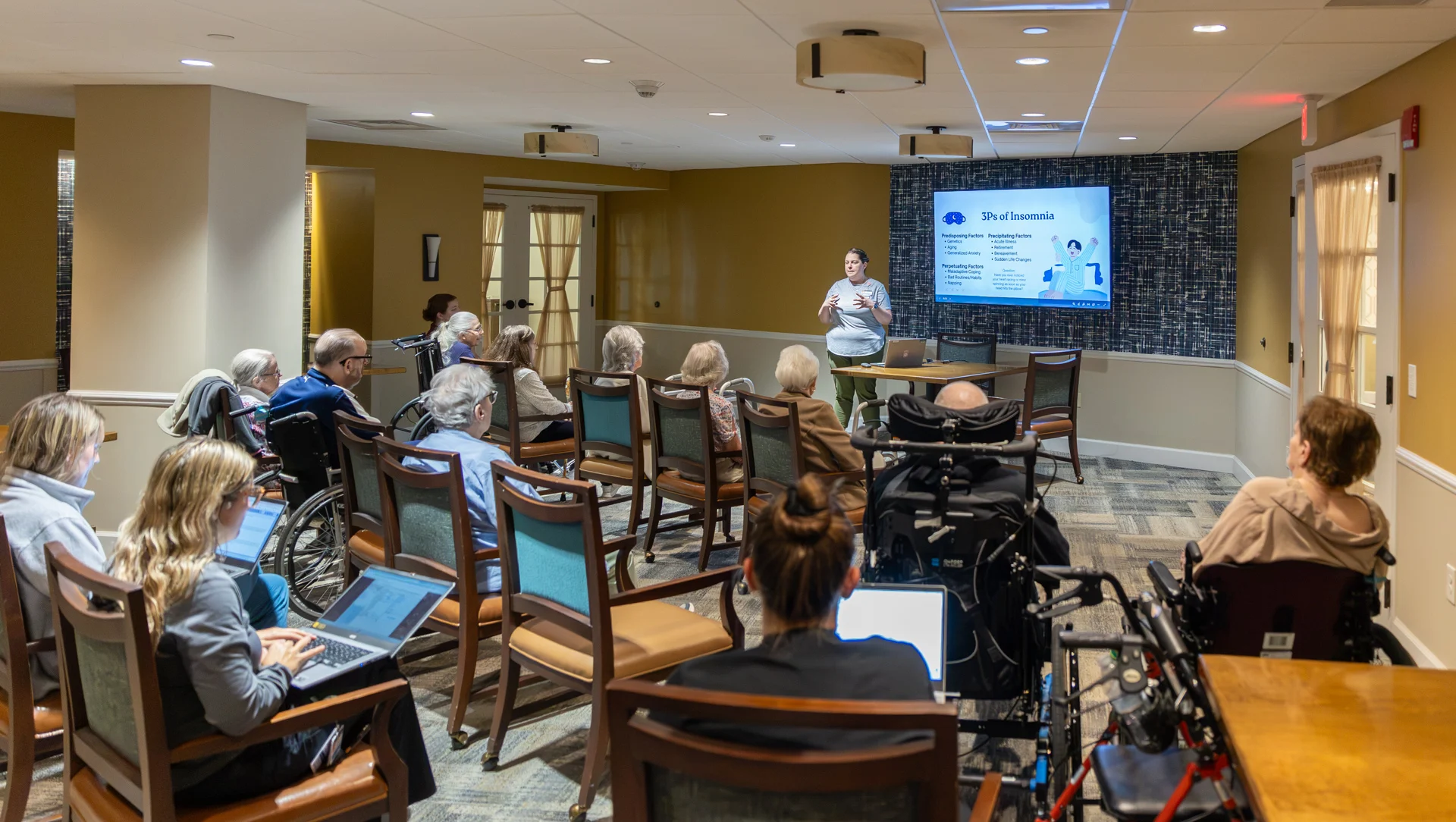
Allison addressed these issues and more during a recent presentation to residents, “Better Sleep for a Brighter Mind: The Impact of Stress on Sleep Quality with Aging.”
Normal physiological aging reduces sleep time by about 10 minutes per decade and lightens deep sleep, Allison said, but chronic problems with falling asleep or non-restorative sleep are not considered part of normal aging. Only 19% of older adults have documented sleeping disorders by their healthcare providers.
The “3Ps of Insomnia,” according to Allison, are Predisposing Factors like genetics and generalized anxiety, Perpetuating Factors like bad sleep routines/habits such as daytime napping and irregular sleep schedules and Precipitating Factors, such as acute illness, retirement or sudden life changes. She spoke about the “5 Pillars of Sleep” and gave residents simple tips and tricks to manage stress, support better health and improve sleep.
Pillar #1 – Stimulus Control (Bed-Sleep Connection)
Issue: After a period of restless nights and insomnia, your brain starts to associate your bed with anxiety, restlessness and frustration.
Solution: The Golden Rule is the bed is for sleeping only. If you lie awake for more than 10 – 15 minutes, do not stay in bed. Move to a dimly lit room and do a quiet activity, like reading or crocheting, until you feel drowsy. Reading in bed is beneficial when used as a calming activity to achieve sleep, but daytime reading for enjoyment should be done outside of bed. Avoid watching TV. TVs emit a “blue light” which mimics morning sunlight and can stimulate your brain (not conducive to sleep).
Pillar #2 – Sleep Consolidation (Efficiency Over Quantity)
Issue: When we struggle to sleep, our instinct is to spend more time in bed and hope to get more sleep. Spending 10 hours in bed but only getting five hours of broken sleep decreases your sleep drive and quality.
Solution: Consolidating fragmented time in bed to match your actual sleep time creates a solid, restorative block of sleep. For example, if you go to bed at 9 p.m. and wake up at 6 a.m. after having slept terribly, try going to bed at 10 p.m. the next night and see if you’re more tired and get more restorative sleep in a shorter period. This can take trial and error. Ultimately, “quality” is more important than “quantity” when it comes to sleep.
Pillar #3 – Cognitive Restructuring
Issue: Sleep Performance Anxiety is a result of watching the clock, telling yourself, “I’ll never be able to function tomorrow,” and creating a negative association with sleep where you don’t feel comfortable in your own bedroom.
Solution: Instead of forcing yourself to sleep, give yourself permission to rest calmly in the dark, close your eyes, remove the pressure on yourself and try to relax. Self-defeating thought loops lead to “hyperarousal” and the reduced production of melatonin. “It’s OK not to fall asleep right away,” Allison said. “By giving yourself allowances, it has the reverse effect psychologically. It stops the loop of anxiety, and you sleep better.” If you have chronic worries in bed, try journaling two to three hours before bedtime to prevent rumination.
Pillar #4 – Relaxation and Parasympathetic Activation
Issue: As we age, our parasympathetic nervous system, or our body’s internal “brakes,” lowers naturally.
Solution: To counteract this process, we need alternatives to relax before bed. Examples include deep abdominal breathing (three cycles of inhale for four seconds, hold four seconds, exhale six seconds); mind-body movements like tai chi and yoga; or listening to calm, slow music, which acts as a non-medical sedative.
Pillar #5 – Designing the Sanctuary
Issue: Your bedroom is not set up as a “sanctuary” for sleep. Bright blue light from phones, tablets and TVs inhibit melatonin production. The bedroom may be too hot, causing frequent awakenings. Environmental noises can trigger a nighttime response.
Solution: Our bodies naturally must drop 1 to 2 degrees to initiate and maintain deep sleep, Allison said. The optimal bedroom temperature is 60 to 67 degrees. If that’s too cold for you, turn on a ceiling fan to a low setting. A white noise sound machine (or earplugs) can help mitigate any noises coming from the house or outside.
In addition to the Five Pillars of Sleep, there are some lifestyle traps that we commonly fall into that may have the opposite effect on sleep.
A nightcap or glass of wine before bed can make us feel drowsy and relaxed, but it can fragment our sleep when metabolizing in the body and exacerbate conditions like sleep apnea, respiratory issues and anxiety.
Over-the-counter sleep aids can also be counterproductive to sleep. Antihistamines like Benadryl or Tylenol PM can lead to balance issues and falling risks, confusion and feeling “off” the next day. Prescription sleep medications like Ativan or Ambien are not as effective in older adults either.
To sleep better, you should limit caffeine later in the day and try not to take naps. Start your morning with exposure to sunlight. Consider a Mediterranean diet, which naturally produces serotonin (mood hormone) and melatonin. Review the timing of your medications with your physician – some may activate you more than others.
If you still have trouble sleeping, sleep apnea (a serious sleep disorder characterized by snoring and interrupted breathing during sleep) could be an issue, and you may need to discuss a sleep study with your doctor to evaluate if a medical condition is impacting sleep.
Creating healthy sleep habits will help you eat better, enhance your balance, walk more safely and improve cognition.
As Allison said:
“The goal is to make you feel better, so you can participate better with the things you love to do every day.”
Better Sleep for a Brighter Mind
Do you lay awake in bed for more than 30 minutes several times a week? Have you noticed your mind spinning as soon as your head hits the pillow? Do you worry about how you’ll
Downsized and Loving the Simple Life with a One-Bedroom Apartment
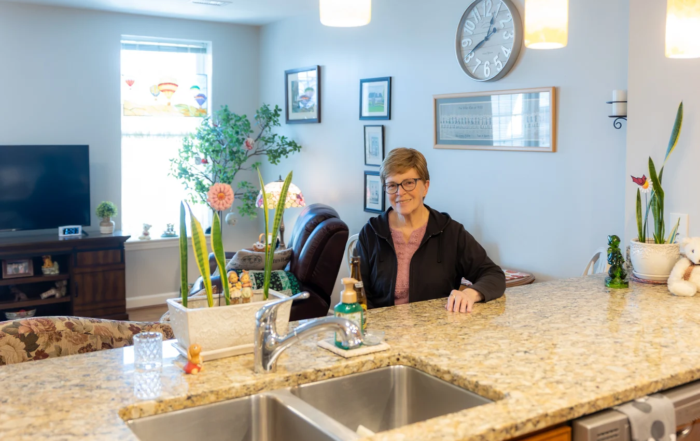
As Joe and Peggy Fierko contemplated a move that would make their lives easier to navigate, their son, Joe Jr., found the ideal home just three minutes down the road at Masonic Village at Lafayette Hill.

Enjoy the Holidays Safely with Help from Powerback
This time of year is meant to be merry. To help keep the focus on food, fun, family and safety, Allison Merrill, director of rehabilitation with Powerback, recently led an educational presentation, “Home for the Holidays at Masonic Village at Lafayette Hill.”

